
SKILLS
STUDENTS
EXPLORE
200 SKILLS
Personal Expression thru croquis, mood boards, swatches...
Design Skills - Color, Proportion, History of Fashion...
Craft Skills - Hand and machine sewing, weaving, knitting, shibori...
Fabric and Fibre Identification & How to add Color and Texture to Fabric
How to access Fabric Production available in the US...
Measuring and Patternmaking - Flat patterning & Draping
Screen Printing & Fabric Manipulation
Sublimation Image Transfer
Spec sheets & Line sheets
Branding and Logos
Sample Making - sew the first one yourself
How to hire a sample seamstress & Cottage Industries
Sample Evaluation - Is it viable in the marketplace at the price?
Photography, LookBooks & Website Design
Costume Making - Historic, Sci-Fi & Cosplay
Inventory and Risk Management
Pluses and Minuses of opening a boutique -- selling online or both?
Customer Service in the digital age
Market Evaluation and Wholesaling through sales reps and trade shows
Financial skills - Risk Evaluation, Spreadsheets, Bookkeeping and Taxes
Sourcing Materials at Trade Shows
Wholesale Distribution, Sales Reps & Trade Shows
Tech, Social Media & The Press
Product Changes for faster, larger, less expensive production runs
Online Sales
Skills required in the International Fashion Industry
Using the Makerspace

Mood boards
Students explore who they might be as designers
and their potential customers.
Often they choose people who look like them.
They make mood boards as an intuitive way to
learn what colors, silhouettes, textures
and time periods appeal to them.


Design skills
Students learn about
Color, Proportion and the History of Fashion.
Students also alter a dress form to fit themselves.
They research the latest in fabric technology.


craft skills
Students are given the opportunity to acquire basic skills
that humans have used for thousands of years.
These skills allow the students to begin exploring their own
creative versions of these ancient crafts.
These skills allow them to produce one of a kind pieces
or run limited pieces to differentiate their label
in the marketplace.
Students learn decorative and invisible
couture hand sewing techniques.
They learn machine sewing, hand weaving, crochet knitting,
button making and leather embossing.
They learn the cleanest, strongest ways to sew on buttons, hooks, eyes and appliques.
Craft skills increase their understanding of how
commercial fabrics are made.
Students are able to recognise the construction
techniques in the miniature versions made by machines
and potentially innovate using new tech.


FABRIC & FIBRE IDENTIFICATION
They learn how to identify plant fibres
like linen, cotton and flax.
They test fabrics to identify animal fibres
like wool and silk.
They explore the characteristics of different manmade fibres
and learn the care instructions for a full range of fabrics.
They learn how to recognise a knit versus a woven,
a jacquard versus a print.
They practice finding the selvedge, the 90 degree grain line
and the 45 degree bias line.
They explore the advantages and disadvantages of
cutting on each.


add color & texture
Students learn different dyeing techniques
from around the world including batik from India
and shibori from Japan.
They learn hand and machine quilting, traditional and
creative embroidery, and painting on fabric.
They are encouraged to experiment
and work with fabrics using the latest technology.


FABRIC production
Students are introduced to fabric makers
still operating in the U.S. and around the world.
They are connected to U.S. suppliers who support
MDfin students by giving them free or discounted
fabrics, trims, threads, buttons and zippers.


measuring & pattern making
Students learn how to measure different places on the body
to achieve an accurate result.
They explore different sizing and body shape
suitable for their brand.
They learn both Flat Patterning and Draping.
They learn the skills necessary to go from
2D to 3D thinking and back again.


screen printing
Students learn the basics of screen printing
including how to create their own screens and
select colors that layer well.
They learn what order to print colors.
They learn to create multi colored layered images
using screen printing on their own tee shirts
which they cut and manipulate to form jackets and dresses.
They visit a local printer who can produce up to
10,000 units on a range of background colors and sizes.


Fabric manipulation
Students learn how to sculpt with fabric
to achieve three dimensional effects.
They learn to create 'fortuni' pleating, felt silk with wool
and sculpt dramatic curves with creative pattern making.


sublimation image transfer
Students learn to create images to be transferred
to fabric using heat activated ink and pressure.
They use the studio printer and photo transfer press
for sampling. Later, they may choose to have rolls of fabric
printed locally for a production run of garments.
They can create the image for their fabric by
producing artworks up to 60 inches by 60 inches.
They also learn how to design repeating, seamless images
on the computer to smoothly merge into each other.


spec sheets
Students create Specification (Spec) sheets or Tech Packs
including detailed measurements, cutting directions, and construction information.
They choose consistent graded sizing information
and U.S. required care tags.
Some students may choose to learn the Gerber system.
This is a form of Computer Aided Design for grading
and efficient layout on the desired grainline or bias.


line sheets of products for sale
Students create line sheets of their
current season's collection, which includes style names
or codes, sizes, and colorways available.
The line sheets are detailed to show garment silhouettes and relative proportion of the garments to each other.
They specify wholesale or retail pricing for both
regular and plus size.
Students initially create a rough line sheet while they are
developing their ideas, using sketches to organize
their thoughts. They recreate the line sheet on the computer once it is settled to enable e-communication.


branding & logos
Students explore their own brand DNA,
design their own logo, and create their own
initial brand images.
They decide what they are NOT as much as they are WHAT!


sample making & evaluation
Students are encouraged to make the
first sample themselves.
They count how many seams are in the garment and
count the number of steps in the construction.
They evaluate the complexity of the steps and number
of different machines required.
They estimate fabric usage and cost against
industry standard formulas. They estimate the hard cost of
the finished garment, the design content and its value to
the product. Later, they may choose to pay a sample maker
to test the production time and adjust the construction
to lower the cost without compromising quality.
Is the product viable in the market with U.S. production cost
or must the product be made offshore?
If offshore, what is the minimum Cut Run or number of units
that must be made?
These 'minimums' are often in the hundreds or thousands.
How will the designer ensure that many garments sell
through at full price? What is the minimum sale price
that still allows a profit? What level of risk can the
designer take and how will each decision
affect future opportunities?


cottage industries
The U.S. is ready for a new 'crafter-centered' form of
Cottage Industry.
Cottage Industries allow crafters to produce
garment components in their homes for their own pleasure
and for money. The designer puts together kits with the
yarns and/or fabrics and sends them to the crafter.
The crafter would otherwise pay for materials and often
give their creations away.
The components come back to the designer who pays for
the final assembly and further decoration. These new
products create a counter balance to the highly commercial
large scale production runs of garments delivered to
department stores and chain stores. The customers are
young professionals who are looking for handmade
creative clothing to go with their more
commercially produced basics.
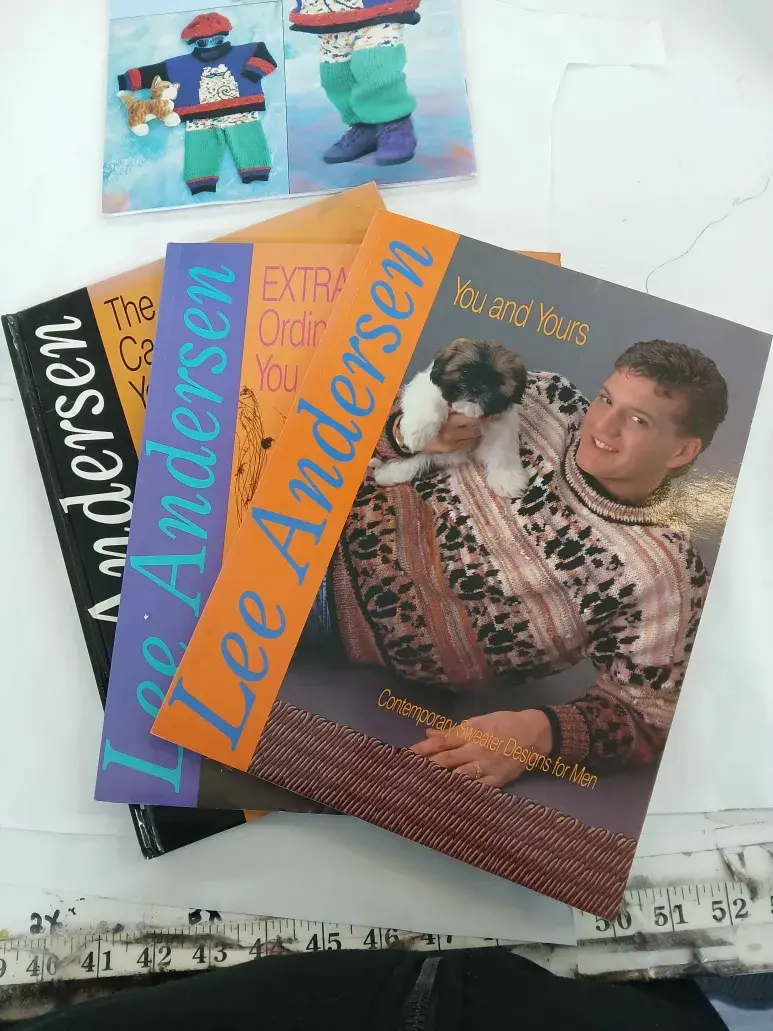
Lee Andersen, the founder of MDfin has run a
knitting Cottage Industry in New Zealand which sold to the
Queen of Spain, the Duke and Duchess of Gloucester
and the Cosby show. She worked with a Cottage Industry
in Peru, and during the pandemic worked with home sewers
in the U.S. to produce 80,000 masks. She also ran a more
formally structured business with a factory that produced
60,000 garments over the life of the business.



photography & Lookbooks
Students learn different fashion photography, including but not limited to:
Catalogue style for communicating information.
Lifestyle for brand messaging.
Editorial for brand building and publicity.
They learn to practice with their own models, model themselves and model with each other. MDfin also brings in
professional models. Students create their own
LOOKBOOKS to use on their websites and to send out
to customers.


website design
Students design and create their own websites
using WIX templates or other common website platforms.
They upload the photos of their products along with
multiple angles for information purposes.
They add prices, sizes and colorways.
They set up an inventory management system,
add a shopping cart, and connect their websites to
their bank accounts.
They prepare a publicity campaign to launch their brand
and encourage early sales to evaluate how the individual
garments will perform in the marketplace.


costume making
Students have the opportunity to work with local theaters,
the internationally distributed Enchanted Living Magazine,
and the new film industry in Howard County.
They have the opportunity to explore Historical and
Geographical costuming, use unusual tech to create sci-fi
costumes for characters in movies and create a cosplay
outfit to wear to a convention.


inventory management
Students learn how to create a 6 yard by 60 inch 'marker'
with all the pattern pieces. They layup the fabric in
multiple layers using the 'spreader'. They use an industrial
cutting knife to cut multiple garments at once.
They calculate and record the 'cut runs' and sizes
based on orders received and anticipated orders to come.
The risk of over-production are weighed against
the efficiencies of larger cut runs.


open a boutique, sell online, or both?
Students learn the pluses and minuses of running
their own boutique.
They are given the opportunity to create a join selling space
and attend craft markets with other students.
They learn the importance of customer service
and what that entails in the digital world.


MARKET EVALUATION & WHOLESALING
Students learn the pluses/minuses and ins/outs
of wholesaling as a business model.


financial skills
They learn the 100 'hard' and 'soft' costs
and margins necessary to run a successful business.
Students learn the financial formulas commonly used
in the industry. They learn to calculate what they can afford
to pay for fabric and sewing if they want to sell a garment at
a specified price. They price their garments and test
the market for a reality check. They learn what
manufacturers typically charge for cutting and sewing
samples, and the cost of various size production runs
as well as the reason behind the price.
They learn how to create a spreadsheet and how to do
their own bookkeeping and taxes.


sourcing materials
Students are invited to travel to New York by train
to visit MOOD and other suppliers.
They attend a trade show on the same trip.
Students and a guide leave BWI train station at 7 a.m. and
arrive in New York at 10 a.m.
They may choose to stay overnight to see a Broadway Show
or arrive back at BWI train station the same evening
by 10 p.m.


technology
Students have the opportunity to learn to use
the latest technology such as CLO3D.
What can designers do today with the latest
technologies?
How do they make 3D renditions?
How do those skills translate to better quality production?
How do those skills translate to more sales
and fewer returns?


SOCIAL MEDIA
Students learn to use social media to grow their brand
and their business.
They begin forming relationships with the press
and other image distribution channels.


product development
U.S. PRODUCTION VS OFFSHORE PRODUCTION
When designers are ready, they learn to make a
manual 'marker' and work with our manual fabric spreaders
and industrial cutting machines.
They can cut 100 or more garments in a range of sizes at one time right here at MDfin.
They learn the steps required to work with
OFFSHORE MANUFACTURERS.
They analyze the upsides and the downsides including
potentially substantially lower unit cost and the higher
financial risks required by committing to a larger cut run
or 'minimum.'
They analyze the impact on profit of longer shipping times
by sea and the unit cost of air shipping, plus which countries
have tariffs.
They evaluate the likelihood of potential intellectual
property loss in the 'third shift.'


ONLINE SALES
Students learn current website selling technology.
They learn the importance of flexible sizing for online sales.
They learn the causes and cost of returns in the digital age.
They learn the cost and value of providing
great customer service.


international fashion industry
MDfin prepares students to contribute in the
broader international world of fashion.
Their practical understanding of all the steps required to
bring a garment to market makes them ideal employees
in large scale Fashion Companies working with
offshore manufacturers.


makerspace
Students and the Community have access to
an amazing MAKERSPACE
Featuring, but not limited to:
Industrial Sewing Machines
Industrial Cutting Knives
Storage for each MAKER
Large Cutting Tables
Pretested Patterns in 7 sizes
Mannequins & Dress Forms
Photography Studio
Pattern Making Paper
2,800+ Specialty Fabrics
Artisan Buttons
Interfacings
Trims...


